Skip to content

The first people on Fuerteventura

History

Fuerteventura fascinates today with endless beaches, vast landscapes and a special tranquillity. But long before the island became a place of longing for visitors, people lived here who have left their traces in rocks, caves and ancient settlements to this day.

This article tells the story of the first inhabitants of Fuerteventura - from their North African roots to the dramatic turning point in the 15th century.

The earliest known inhabitants of the island were the Mahos - an indigenous people who lived on Fuerteventura from around 1000 BC and shaped the island for more than two and a half millennia.

Their origins can be traced back to the North African Berber cultures. Ceramics, tools, genetic characteristics and linguistic parallels point to this.

The Mahos lived in:

  • Caves and simple stone houses

  • small communities spread across the island

  • a barren, dry landscape, which they utilised with impressive adaptability

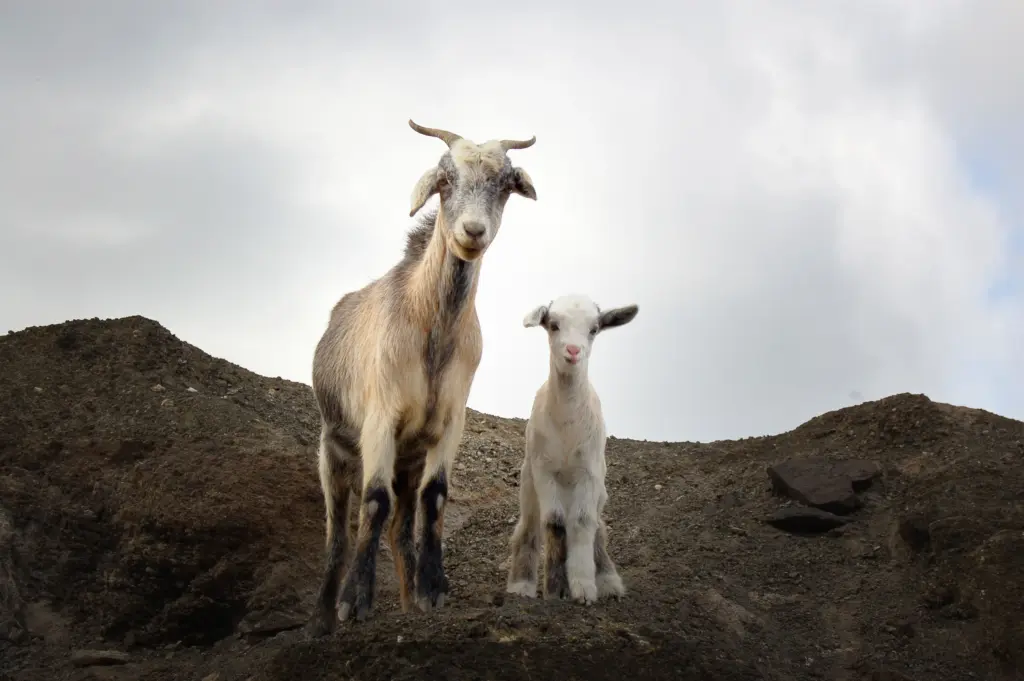
Goat farming played a central role in their everyday lives - and still characterises Fuerteventura today.

Over the centuries, the Mahos developed a stable social and political structure that divided the island into two large dominions:

Maxorata - the northern kingdom

The larger, northern part of Fuerteventura was known as Maxorata.
The majority of the population lived here, spread across villages, cave settlements and small communities.
The area was more fertile than the south and offered better opportunities for cattle breeding and gathering.

Due to the comparatively better conditions, Maxorata developed into the central living space of the Mahos, where social structures, trade and everyday processes were centred.“

Jandía - the southern kingdom

The south is known as Jandía - a vast, sometimes even more barren area characterised by the Jandía peninsula.
Although the region was less densely populated, Jandía had an important strategic and cultural significance for the Mahos, as the peninsula with its natural defences, waterholes and coastal accesses served both as a place of retreat and as a ritually significant area.

The rulers of the two kingdoms

Both kingdoms were led by their own kings, who had a central role as political and spiritual authorities.

These were shortly before the European conquest:

  • Guise - King of Maxorata

  • Ayoze - King of Jandía

The two leaders ruled independently of each other, but maintained peace or strategic alliances between their empires, depending on the situation.

Today, visitors encounter their names in various places, such as the large bronze statues at the Mirador Guise y Ayose near Betancuria.

Insight into the past:

If you want to understand the world of the Mahos even better, the Museo Arqueológico de Fuerteventura in Betancuria is one of the most important places to visit on the island.

The museum shows:

  • original artefacts from the Mahos

  • Reconstructions of their way of life

  • Insights into tools, ceramics and everyday life

  • the historical development of Fuerteventura until the European arrival

It is the best place to experience the early history of the island in a tangible way.

Between 1402 and 1405, the first Europeans reached the islands - led by the Norman Jean de Béthencourt and his companion Gadifer de La Salle.

After conquering Lanzarote, they came to Fuerteventura and clashed with the two existing kingdoms.

In 1405, Guise and Ayoze surrendered to the European conquerors.
This marked the beginning of a new era - and the more than 2,400-year history of the Mahos slowly came to an end.

After the capitulation, Fuerteventura became part of the Castilian sphere of influence.
The changes were profound:

15th to 17th century
  • Foundation of the first capital Betancuria as the political and religious centre of the island

  • Missionisation of the indigenous population by Spanish priests

  • Establishment of a new social and political order, characterised by Castilian administration

  • Immigration of European settlers, who brought new structures and ways of life with them

  • Decline of indigenous culture due to mixing, adaptation and the influence of new rule

18th century
  • Recurrent pirate attacks, especially by North African corsairs (raids on coastal towns, cattle thefts, kidnapping of individual inhabitants).

  • Several smaller raids along the west and north coast, which often came as a surprise.

  • Construction of defences to warn and defend the islanders:

    • Torre de El Tostón (El Cotillo, 1741-1743), for monitoring the north-west coast

    • Castillo de San Buenaventura (Caleta de Fuste), protection of the east coast

  • First organised coastal surveillance, which gradually reduced the frequency of attacks.

19th century
  • Agriculture and goat farming remained the most important sources of livelihood on the island

  • Long periods of drought led to crop failures and economic hardship

  • Temporary waves of emigration, especially to Cuba and South America, in search of better living conditions

  • Slow social development, as the island remained sparsely populated and structurally limited

20th century
  • Start of modernisation, including better transport routes, fluctuating economic programmes and initial public infrastructure

  • Expansion of roads, villages and supply networks, making remote areas more accessible

  • Industrialisation remained low, which is why the island continued to be strongly characterised by agriculture

  • The basis for the subsequent change in tourism from the 1960s onwards, which had a lasting impact on the island

It was not until the 1960s that the economy began to change.
Tourism, new job opportunities and international influences changed the face of the island forever. Fuerteventura became the unique place we know today:

  • multicultural

  • open

  • wide and free

  • characterised by its long history

But beneath all the modern structures lies the ground on which the Mahos lived over 3,000 years ago - visible in cave settlements, artefacts and the stories that archaeology and tradition tell today.

The history of this island goes back a long way - from the first indigenous settlers through the two kingdoms of Maxorata and Jandía to the European conquest and modern development.

If you walk through the vast landscapes today, you will not only see nature, but also the traces of a people who lived here for thousands of years and left their mark on the island.

Experience Fuerteventura in all its facets

Articles, impressions & interesting facts